
Overbuilding the Grid?
By Andy Vesey
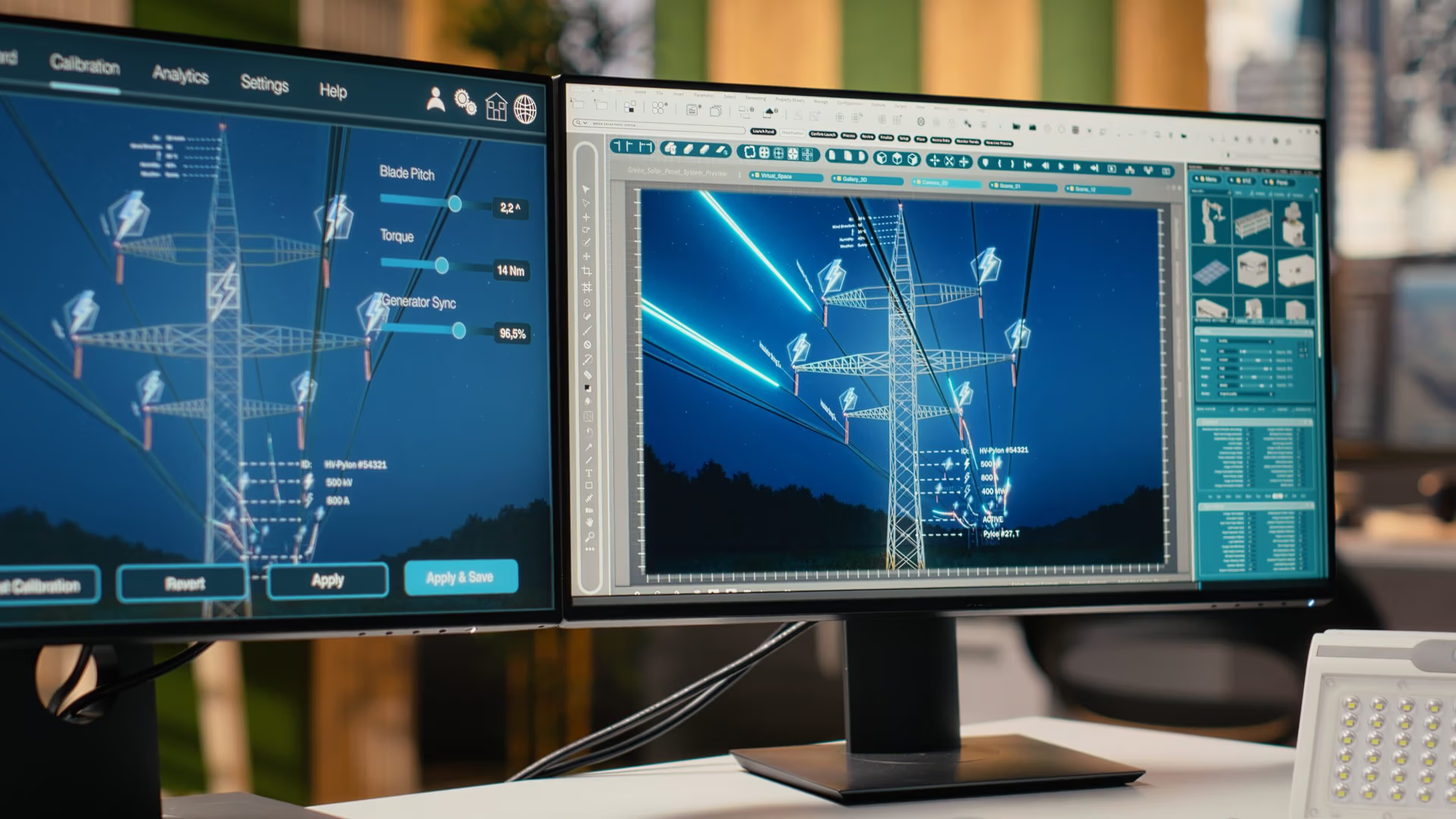
AI data centers may force the grid to overbuild.
Not simply because the industry needs more electricity, but because the grid was built around an assumption that is starting to weaken: diversity of demand.
Power systems work efficiently because different parts of the economy behave differently. Residential load peaks at different times than industrial load. Weather affects regions differently. Large customers do not normally ramp together at the same moment or hit peak demand simultaneously. That diversity allows utilities and system planners to operate the grid without having to build every part of the system around worst-case conditions.
For years, data centers fit inside that model. Their load profiles were unusual, but the projects were small enough and dispersed enough that the system could absorb the complexity. Developers relied on the grid to manage high peak-to-base ratios, fast ramp rates, and difficult-to-predict peaks.
AI scale changes the math.
Large facilities are increasingly clustering in the same regions, with similar operating characteristics and demand profiles that can move very quickly. Utilities can manage individual projects. The problem arises when planners examine multiple large facilities behaving similarly during system peak and contingency events.
That changes how the system gets planned. Planners assume these facilities peak during system peak conditions. They study them under increasingly stringent reliability scenarios. As more projects are added to the grid, the upgrades required to maintain reliability become substantial. More transmission has to be built. Reserve margins increase. Capacity is planned around coincident peak conditions that may occur only for limited periods. Parts of the system start being designed around extreme operating cases rather than diversified load behavior.
That is expensive. It is also one of the reasons the architecture around these facilities is evolving. The investment behind the meter is no longer just about securing supply for a load. It is increasingly about integrating generation, storage, controls, and the compute load itself into a single operating system that actively manages the facility’s interactions with the grid.
The projects that stand out over the next decade may not be the ones that secure the most power.
They may be the ones that place the least stress on the system around them.